Applying for French Citizenship and the Paperwork Behind It
Every year, tens of thousands of foreign residents become French citizens. For some, it is the end of a journey that began decades earlier as students or workers. For others, it is a way to secure their children’s future or to vote in the country where they pay taxes. Behind each ceremony stands a long application file and a lively political debate.
Naturalisation sits at the crossroads of identity, immigration and integration, three themes that dominate French political life. Understanding both the politics and the practical steps helps applicants prepare a stronger file and avoid months of delay.
A subject that never leaves the political agenda
Few topics divide French parties as sharply as nationality. Some argue for stricter conditions, longer residence requirements and tougher language tests. Others defend a more open approach rooted in the republican idea that citizenship is earned through participation rather than ancestry.
Recent immigration laws have adjusted requirements on language level, knowledge of French history and adherence to republican values. Each reform sparks parliamentary battles, constitutional challenges and heated television debates. For applicants, the practical effect is that rules can change between the day they start gathering documents and the day they submit them.
The main routes to French nationality
The most common path is naturalisation by decree, open to adults who have lived in France for several years, usually five, with stable income and integration. The period can be shorter for graduates of French higher education or for people with exceptional contributions to the country.
Spouses of French citizens can apply by declaration after a period of marriage and shared life. Children born in France to foreign parents may acquire nationality under certain conditions linked to residence. Each route has its own list of documents and its own administrative office.
The language requirement
Applicants must prove a minimum level of spoken and written French, usually through a recognised test or a French diploma. The required level has been raised in recent reforms, reflecting the political view that language is a pillar of integration.
An interview with an official also checks understanding of French history, culture and the values of the Republic. Many applicants prepare with study guides and practice sessions, since the conversation can feel intimidating even for fluent speakers.
Documents that come from abroad
The application file includes a full birth certificate, proof of marital status, parents’ civil records, criminal record extracts from countries of previous residence and evidence of income and housing. Documents issued abroad must be accompanied by an official translation made by a translator recognised by French authorities.
This is where many files stall. A translation done by a friend or an unofficial service will be rejected. Names spelled differently from one document to another also trigger requests for clarification, so consistency with the passport matters from the very first page.
Health paperwork is part of that file more often than applicants expect. Medical certificates, vaccination records and proof of health coverage may all need to travel with the civil documents, especially for families and older applicants. Those pages are not just administrative: a doctor or insurer may rely on them later, so errors carry a different weight. Using medical translation services for the health items keeps diagnoses, dates and coverage terms exact while the rest of the file follows the official route.
Apostilles and legalisation
Depending on the country of origin, foreign civil documents may need an apostille or full legalisation before translation. France has bilateral agreements with some countries that exempt certain documents, while others require the complete procedure through consulates.
The order of steps is important, and getting it wrong means paying twice. PoliLingua explains the process clearly in its guide to translation and apostille services, including which step should come first.
Where to find official guidance
The French government portal Service-Public.fr publishes up-to-date lists of required documents for each type of application, as well as information on fees, timelines and online submission. Checking it before every step is wise, since requirements are updated after each legislative change.
Prefectures increasingly use online platforms for applications. Scanned documents must be clear, complete and correctly named. A blurred stamp or a missing back page can send a file back to the start of the queue.
Waiting, interviews and the final decision
Processing times vary widely between regions, from under a year to well over two. During this period, police checks are carried out and the applicant is invited to the interview. Changes in personal situation, such as a new job or a move, must be reported promptly.
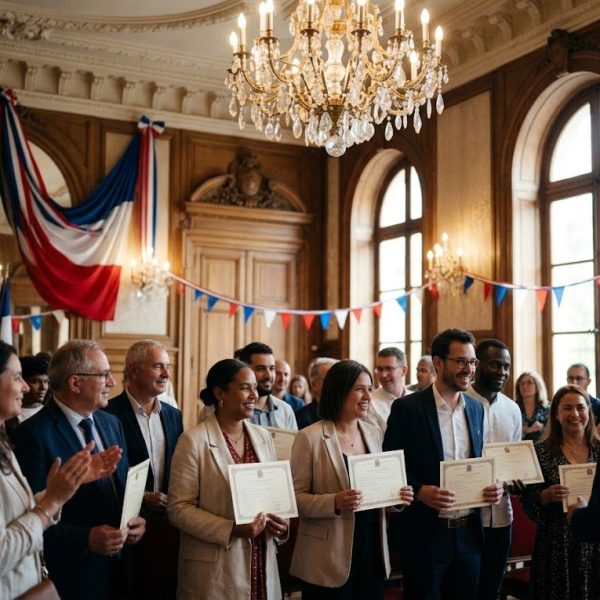
If the decision is positive, it is published in the Journal Officiel, and the new citizen is invited to a welcome ceremony at the prefecture. Many describe it as an emotional moment, a mix of pride, relief and a sense of belonging after years of effort.
Why the debate matters for applicants
Political rhetoric can make applicants feel unwelcome, even when the rules themselves remain achievable. Associations that support migrants encourage people not to be discouraged by headlines and to focus on preparing a complete, accurate file.
Practical preparation is the best answer to uncertainty. Gather documents early, request translations from recognised professionals, keep copies of everything and follow official sources rather than social media rumours.
Becoming French is both a personal milestone and a political act. A well prepared application, supported by reliable translations, turns a complex process into a manageable one.